

by Team Tradify, October 30, 2026
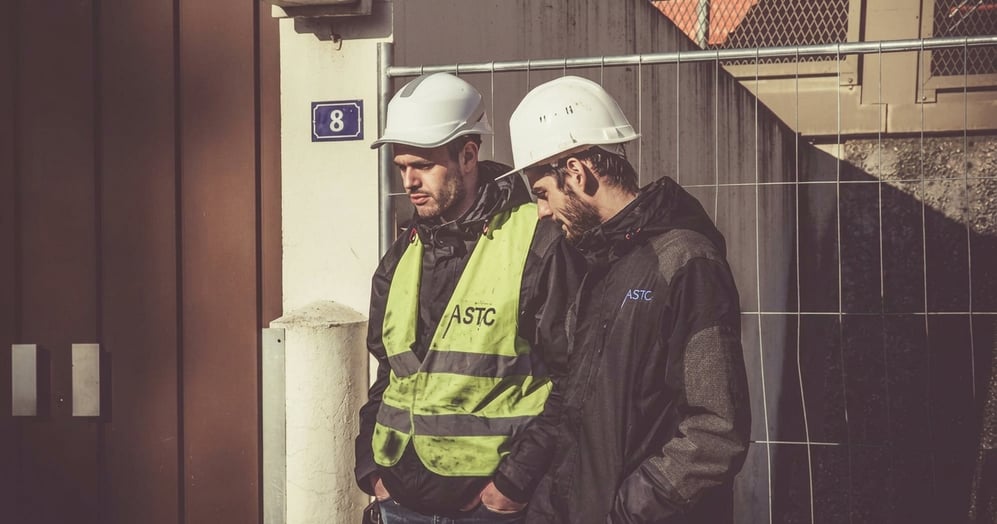
To register with Gas Safe, you need the right qualifications (CCN1 plus assessments for each appliance type), a portfolio of supervised gas work, and an online application with your business details and National Insurance numbers. You then complete a three-month probation and renew every year. Most professional gas work must be on the Gas Safe Register, so it’s worth knowing the process before you start.
Getting ready to start your own gas business? Use this free checklist!

Want to become registered? Check out the steps below!
- What is the Gas Safe Register?
- Do I need to register with Gas Safe?
- What qualifications and training do you need?
- How to apply
- What happens after registration?
- How long does it take to get Gas Safe registered?
- Renewal and reassessment
- Common mistakes to avoid
- Gas safety certificate app for trade businesses
1. What is the Gas Safe Register?
The Gas Safe Register is the official list of gas businesses and engineers in the UK, the Isle of Man, Guernsey and Jersey. Northern Ireland is covered by the same register but is governed by HSENI (Health and Safety Executive Northern Ireland) rather than the UK HSE.
If you do gas work in Great Britain (England, Scotland, and Wales), you must be registered under the Gas Safety (Installation and Use) Regulations 1998. Northern Ireland has its own rules: the Gas Safety (Installation and Use) Regulations (Northern Ireland) 2004.
Unregistered gas work is a crime. A conviction can mean an unlimited fine and up to two years in prison. In Great Britain, the Health and Safety Executive (HSE) enforces the rules, and in Northern Ireland, the Health and Safety Executive for Northern Ireland (HSENI) does. Their job is to protect people from unsafe gas work. What this means for you depends on how you work:
-
If you’re a sole trader: you register your business under your own name or trading name. You also need the qualifications for the gas work you do.
-
If you work for another business: your employer adds you to its registration. You still need the qualifications for the gas work you do.
Either way, working without registration is a crime. A conviction can mean an unlimited fine and up to two years in prison.
2. Do I need to register with Gas Safe?
Knowing how to register with Gas Safe matters because registration covers work on gas appliances and pipework. The registration belongs to a business, and engineers are listed under it. What you do depends on how you work:
-
Sole trader registering their business: If you’re a sole trader, you are a business owner operating independently. You register your business under your own name or trading name, and you are the sole engineer on the registration.
-
If you own a business that employs gas engineers, register the business once, then add each Gas Safe-registered engineer to it. You’ll need each engineer’s National Insurance number and proof of their qualifications.
-
If you’re an engineer working for an employer, you don’t apply yourself. Your employer adds you to its registration.
Whichever applies to you, every engineer should check two things:
-
You’re listed. Make sure you appear on the register under the right business and have a current registration.
-
Your registration covers your work. Your Gas Safe ID card shows the categories of work you’re qualified for (for example, boilers, cookers or gas fires). You can only do gas work in the categories on your card. Check what the ID card categories mean if you’re unsure.
3. What qualifications and training do you need?
You’ll need training, hands-on experience and the right assessments to become Gas Safe registered. Your route depends on your experience and the gas work you want to do. You’ll take assessments for the relevant areas, such as boilers, cookers or fires. Once registered, you can only work on the categories shown on your Gas Safe ID card.
Core qualification: CCN1
When a business applies to join the Gas Safe Register, at least one engineer named on the application must hold a relevant domestic core gas qualification. CCN1 (Core Domestic Gas Safety) is the most common route, but Gas Safe may accept an aligned qualification instead.
CCN1 (Core Domestic Gas Safety) is the essential foundation for domestic gas work. It covers essential safety standards, including combustion performance analysis (formerly CPA1), which is now automatically built into the core assessment.
CCN1 is common, but it isn’t the only route. Some recognised, ACS-aligned gas-services NVQs or SVQs can also meet the domestic core qualification requirement. However, a business applying for Gas Safe registration must list at least one engineer with a current domestic core qualification. Each engineer must also hold the right qualifications for the gas work they carry out. Gas Safe’s registration guidance explains the requirements.
Appliance assessments
Alongside CCN1, you sit an assessment for each type of appliance you want to cover. You can only register for the types you hold:
|
Appliance Code |
Category / Description |
|
CENWAT |
Central heating boilers and water heaters |
|
CKR1 |
Domestic cookers |
|
HTR1 |
Gas fires and wall heaters |
|
MET1 |
Gas meters |
|
DAH1 |
Warm air heaters |
Training routes
There are three main ways into gas work. Which one suits you depends on your experience and whether you have a gas employer behind you. Each route also has its own training time, including supervised work, assessments, and Gas Safe registration.
-
Apprenticeship (Level 3 Gas Engineering Operative): For someone starting out who has secured a place with a gas employer. You can’t do it without an employer, and each employer sets its own entry rules. It combines workplace training and study and typically takes about 18 months, followed by a three-month assessment period.
-
Managed Learning Programme (MLP): For new entrants, or for someone with relevant building-services experience such as plumbing or mechanical work. It combines structured learning with supervised gas work to prepare you for ACS assessment. The classroom or training stage can take anywhere from 4 to 26 weeks, depending on whether you study full-time or part-time. Completing your supervised work portfolio, taking the ACS assessments and getting registered all take extra time on top of that.
-
Experienced worker route: For someone who already has relevant gas qualifications and work experience. An assessment centre can check whether you meet the ACS entry requirements or require further training. A relevant qualification alone doesn’t automatically qualify you for this route.
Where to start your Gas Safe training: New to gas? Access Training’s gas courses include a managed learning programme made for complete beginners who want to become Gas Safe registered. It leads to ACS assessment and official registration.

4. How to apply
If you are looking to get registered as an individual sole trader or a business, follow these steps:
i. Build your portfolio of gas work
To register, you need to show you can do the work safely. Build a portfolio of supervised gas jobs and keep proof for each one—including photos, sign-offs, and certificates. Start logging evidence on your first supervised job, as collecting it later is much harder. Once complete, you will submit your portfolio directly to your training centre to qualify for your ACS assessments. After you pass, your awarding body sends your official qualifications straight to Gas Safe electronically.
ii. Gather your business and engineer details
Have these ready before you fill in the official application on gassaferegister.co.uk:
-
Business contact details: Company name, address, phone number, and trading name if different.
-
National Insurance numbers: Required for each Gas Safe registered engineer on the registration.
-
Proof of qualifications: Sent electronically by your awarding body.
-
Payment method.
(Check your public liability insurance before you apply. While not legally mandatory to join, it is strongly recommended).
iii. Apply online and pay
To register with Gas Safe, apply online through the official Gas Safe Register application portal.
Official Fee Schedule:
-
New registration fee: £319.96 + VAT (£383.95 inc VAT) for a new one-engineer business (covers application, first registration, one engineer, and a digital licence card).
-
Additional engineers: £44.40 + VAT (£53.28 inc VAT) per extra engineer.
-
Replacement or physical ID cards: £15.91 + VAT (£19.09 inc VAT) per physical card.
5. What happens after registration?
Once you’re registered, you start a three-month probation period. During this time, you tell Gas Safe about the work you do, and an inspection may follow.
-
Records & Notifications: Probation is when your records matter most. Keep records from day one. Save every certificate, sign-off and notification in one place, not in a pile on the van seat.
-
Card issuance: Passing your ACS assessments doesn’t mean you’re automatically registered. Your awarding body will need to send your results to Gas Safe, and you will still need to apply for business registration. Gas Safe issues your ID card once the registration is approved.
6. How long does it take to get Gas Safe registered?
The overall timeline to achieve registration depends on your chosen training route and existing experience:
- Apprenticeship Route (18 to 24 months): Combines full-time employment with day-release college training.
-
Managed Learning Programme (MLP) Route (6 to 12 months overall): Designed for new entrants or career changers.
- In-Centre Theory & Workshop Training: Takes 4 to 26 weeks (intensive full-time courses take 4–10 weeks; part-time/day-release span 26+ weeks).
- On-Site Portfolio & ACS Assessment: Takes roughly 16 to 24 weeks to log required on-site evidence alongside a registered engineer and pass ACS exams.
What affects the overall timeline?
-
Training Format: Full-time intensive classroom study finishes quickly, whereas weekend or day-release schedules take several months.
-
Portfolio Completion Speed: The longest variable is how quickly a candidate secures an on-site placement and logs mandatory supervised work hours.
-
Prior Experience: Candidates with plumbing or mechanical backgrounds can often fast-track certain modules.
7. Renewal and reassessment
Your Gas Safe register renewal must be done every year. Put the expiry date in your diary and renew before the date on your ID card.
-
Online renewal: £139.78 + VAT (£167.74 inc VAT). Online renewal costs less than post or phone.
-
Offline renewal (phone or post): £171.58 + VAT (£205.90 inc VAT).
-
Late renewal penalty: £137.78 + VAT (£165.34 inc VAT) if you don’t pay on time.
-
ACS Reassessment: ACS assessments need to be redone every five years. Set a reminder as soon as you pass.
8. Common mistakes to avoid
-
Working before your registration is confirmed: Your registration must be in place before you start any gas work.
-
Forgetting the five-year reassessment: Set a reminder immediately to avoid lapses in compliance.
-
Letting your renewal lapse: If your registration lapses, you can’t legally do gas work.
9. Gas safety certificate app for trade businesses
Gas work creates a lot of paperwork, and during probation every job counts. A digital gas safety certificate app keeps your certificates in one place, so they’re easy to find when you need to send a notification or face an inspection.
Tradify’s range of digital gas safety certificate templates includes:
Tradify keeps quotes, invoices and certificates in one place, so the paperwork for a job sits alongside the job itself. If you work on rented homes, landlords need a gas safety record every 12 months under Regulation 36 of the Gas Safety (Installation and Use) Regulations 1998 (Landlord Duties). Having the certificate on file makes it easier when the next one is due.

This article is general information, not legal advice. Information current as at 26 October 2026. Fees and rules change, so check the Gas Safe Register website before you apply.


How to Register with Gas Safe UK

How to Get an Electrical Licence in UK
Health and Safety in Plumbing & Gas - Regulations and Policies
Give Tradify a go for free!
Save 10+ hours/week on business admin with the highest-rated job management software for tradespeople.
With free one-on-one training and phone support, it's never been easier to get started.
