

by Team Tradify, October 15, 2026

Your earnings as an electrical business owner depend on what you bring in, what you spend and how you pay yourself. Here’s how to improve profitability, set a healthy margin and compare your revenue with businesses your size.
Still deciding whether to start out on your own? See how to start an electrical business.
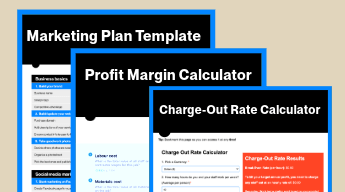
Are you charging the right price? Use this calculator and find out!

- How to run a more profitable electrical business
- How to set up a healthy profit margin
- Electrical business revenue by team size
1. How to run a more profitable electrical business
Keeping more of what you earn starts with pricing jobs properly, tracking costs and getting paid. Here’s where to focus.
-
Price every job to cover your costs.
Materials and labour are only part of the bill. Your pricing also needs to cover vehicle costs, insurance and other overheads, with room for profit. Try this electrical wiring cost calculator as a starting point. -
Make your quotes easy to say yes to.
Send them promptly, spell out what’s included and follow up. Start with an electrician quote template or electrical estimate template to save yourself some typing. -
Know what each job makes.
That quick call-out still uses time, fuel and materials. Record those costs against the job so you can see what’s left. Tradify’s job tracking and job costing tools help you spot which jobs pay off and which need a pricing rethink. -
Invoice while the job’s still fresh.
Send your invoice as soon as the work is finished, then use automated payment reminders to follow up. A full calendar won’t cover the bills if the money hasn’t landed. -
Protect your time.
Quotes, scheduling and invoices all take time, even when you squeeze them in after dinner. Set aside time for admin during the working week and look for tasks you can automate. -
Get your systems ready to grow.
Another electrician means more capacity, plus more jobs to coordinate. Our guides to growing a small electrical business and marketing an electrical business cover managing growth and bringing in new work.
2. How to set up a healthy profit margin
An extra hour on-site, a forgotten fitting, another trip to the wholesaler... it all comes out of your profit. Your pricing needs enough breathing room to pay you properly and keep the business going.
Profit margin is the percentage of revenue left after costs. There’s no single target that suits every electrical business, but you can work out what yours needs to earn.
Start with these five steps:
- Know your costs. Add up labour, materials and overheads such as your van, insurance, tools and software. Include what you need to pay yourself, without counting it twice.
- Be realistic about billable hours. You can’t charge every working hour to a customer. Allow for quoting, travel, admin, holidays and gaps between jobs.
- Build in your profit. Covering costs gets you to break-even. Your prices need room for profit too.
- Check before you quote. A full week of work should pay its way. Check that each quote covers the job’s costs, contributes to overheads and leaves your target profit.
- See what actually happened. Compare your estimate with the final hours and materials. If a job earned less than expected, find out why before quoting the next one.
That last step helps Sydney electrician Daniel Simpson at Danjac Electrical decide which jobs are worth taking.
“I can see on the fly if the job is going to be profitable or not, all the way through.”
With that information, Daniel can charge more for work with lower margins or pass on it altogether.
Small improvements add up. On £500,000 in annual revenue, moving from a 10% to an 11% profit margin means an extra £5,000 in profit, before tax.
Keep those job records as you grow. They’ll help you make better pricing decisions now and show a potential buyer how the business performs later. Our guide to selling an electrical business covers what to prepare.
3. Electrical business revenue by team size
To put an electrical business owner’s salary in context, it helps to see what the business brings in first. Here’s how average annual revenue compares for electricians working solo and running teams.
Of course, that money isn’t all yours to take home. Materials, wages, van costs and other expenses take their share. But these figures give you a starting point for understanding what businesses your size earn before those costs.
| Country | Sole trader (1 person) | Small team (2 to 4 people) | Medium team (5 to 12 people) | Large team (13+ people) |
|---|---|---|---|---|
|
Australia |
A$283,000 |
A$688,000 |
A$1,527,000 |
A$4,434,000 |
|
United Kingdom |
£108,000 |
£294,000 |
£707,000 |
£2,093,000 |
|
New Zealand |
NZ$377,000 |
NZ$580,000 |
NZ$1,319,000 |
N/A |
Average annual invoiced revenue for Electrical & AV businesses using Tradify, rounded to the nearest thousand. Figures use each country’s local currency. New Zealand’s large-team figure is withheld because of insufficient sample size.
What does this mean for your business?
Start with the column closest to your team size. If your revenue is lower, check your pricing, billable hours and whether every bit of work makes it onto an invoice. If it’s higher, check what you’re keeping — extra turnover can disappear quickly into extra costs.
And if you’re weighing up your first hire, give that decision its own sums. Another pair of hands can help you take on more work, but their wages, equipment and training need to earn their keep too. These averages show how businesses of different sizes compare; they don’t predict what hiring will add to yours.
You might want a bigger team, or you might prefer one van and a good living. Either way, the goal is work that pays properly and a business you enjoy running.
Where the figures come from
- Australia: Australia’s Top-Earning Trades Report, using Electrical & AV averages by team size.
- United Kingdom: The UK’s Top-Earning Trades Report.
- New Zealand: Tradify trade performance data for the 12 months to 31 August 2026, covering 89 sole traders, 95 small teams and 22 medium teams.
Thinking about selling one day? Try our business valuation calculator for a starting estimate.
Ready to get started?
Try our 14-day free trial, or jump into a free demo.


Electrician Business Owner's Salary: How Much Can You Earn?

Tradie Hourly Rates State By State

How to Improve Retention in Trade Apprenticeship Programmes
Give Tradify a go for free!
Save 10+ hours/week on business admin with the highest-rated job management software for tradespeople.
With free one-on-one training and phone support, it's never been easier to get started.
