

by Team Tradify, November 6, 2026
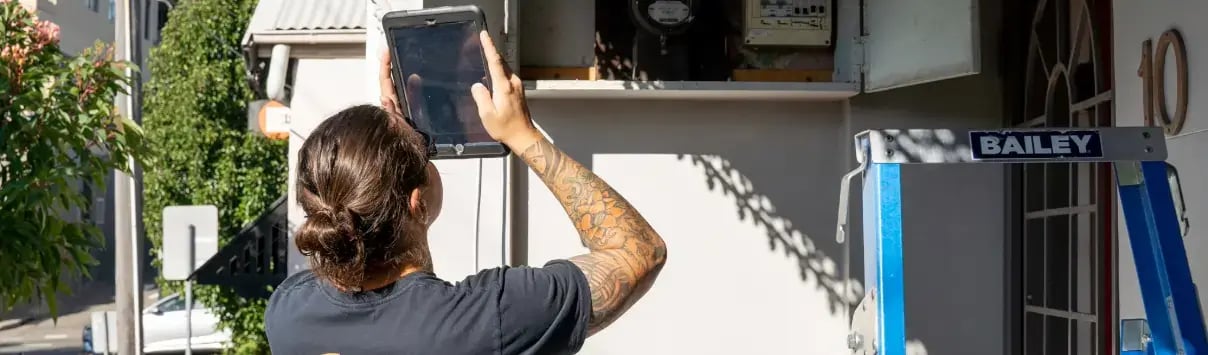
To get an electrical licence in New Zealand, you need to be registered with the EWRB and hold a current practising licence. Most people qualify through an electrical apprenticeship, but experienced workers, overseas-trained electricians, and Australian licence holders have different routes. Find out what you can do without a licence, the qualifications you need to get an electrical licence, what it costs, and how to keep your licence current.
Prepare to ace your apprenticeship interview with our free question prep!

Short on time? Skip ahead!
- Steps to get an electrical licence in New Zealand
- Can you do prescribed electrical work without a licence in NZ?
- How much does an electrical licence cost?
- How do you renew and keep your practising licence current?
- Run your electrical business with Tradify
1. Steps to get an electrical licence in New Zealand
The Electrical Workers Registration Board (EWRB) regulates the electrical industry by issuing different classes of registration depending on the specific scope of work you intend to carry out. There are numerous electrical licence classes such as the Electrical Inspectors, Electrical Installer, Electrical Service Technicians, and Electrical Appliance Serviceperson, but this guide focuses exclusively on the Electricians class which authorises full prescribed electrical work.
For other specialisations, you can view the EWRB's full list of registration classes. While the overarching administrative processes (like portal applications and renewals) are similar across classes, the specific qualifications and experience requirements vary.
Step 1: Choose your registration classBefore starting your application journey as an Electrician in New Zealand, you’ll need to ensure that this is the correct class for your career scope, as your authorised scope of prescribed electrical work (PEW) is legally tied to your registration.
Step 2: Get qualifiedTo become a registered Electrician, you need a qualification the EWRB accepts. Check the following list for your route to follow to see the specific requirements, experience, exams, and fees:
Route A: The Standard Apprenticeship (New Zealand Pathway)
-
Qualifications: A Level 4 trade certificate combined with an apprenticeship. Accepted qualifications include:
- National Certificate in Electrical Engineering – Electrician for Registration (Level 4)
- National Certificate in Electricity Supply – Electrician (Level 4)
- New Zealand Certificate in Electrical Engineering Theory and Practice (Trade) (Level 4)
- New Zealand Certificate in Electrical Trade (Level 4), with General Electrical and Electricity Supply strands (Check with your training provider to confirm which version you're enrolled in, as qualification titles are updated periodically).
-
Experience: Complete 4 years (8,000 hours) of practical training while holding an Electrician Trainee Limited Certificate (TLC).
-
Exams & Assessments: Pass both the official Electricians Theory coursework/written exam and Electricians Regulations coursework/written exam, and complete EWRB Practical Assessments Stages 1, 2, and 3.
-
Fees & Extras: TLC application ($130), exam entries (~$149.50 + GST each), and registration application ($350).
Route B: The Overseas-Trained Pathway
-
Qualifications & Experience: Complete 4 years (8,000 hours) of practical training and experience overseas, including at least 1 year (2,000 hours) of experience specifically in building wiring installation.
-
Exams & Assessments: Pass both the official Electricians Theory coursework/written exam and Electricians Regulations coursework/written exam, and complete the specific practical assessments set out in your official EWRB assessment letter.
-
Fees & Extras: Overseas registration application ($1,650).
Route C: Australian Licence Holders
-
Requirements: Verified through the Trans-Tasman mutual recognition process.
-
Safety Training: Complete EWRB-approved safety training covering Safe Working Practices, Electrical Testing, First Aid, and CPR.
-
Competence Programme: Complete and pass a Board-approved Competence Programme course within the 2 years before you apply for a practising licence. The course must be relevant to your class of registration.
-
Fit and Proper Person Declaration: Complete the EWRB's Fit and Proper Persons declaration as part of your practising licence application.
While you train, you work under supervision on a Trainee Limited Certificate (TLC). You'll need a nominated supervisor who holds the right registration and a current practising licence.
Step 3: Log your practical work experience
For an Electrician under the New Zealand experience pathway, the EWRB asks for 4 years (8,000 hours) of practical training and experience. That hour count has to be done while you hold an Electrician TLC, so don't let your TLC lapse mid-stream.
Keep clean logs from day one, recording dates, hours, employer details and supervisor signatures. EWRB applications need work-experience references on company letterhead, signed and dated, showing the dates and hours of your prescribed electrical work. Accurate records protect your application.
Step 4: Pass the EWRB exams
To become a registered Electrician in New Zealand with a practising licence that covers all prescribed electrical work, you'll need to:
- pass the Electricians Theory coursework and written exam
- pass the Electricians Regulations coursework and written exam
- complete stages 1, 2 and 3 practical assessments
- complete 4 years (8,000 hours) of practical experience as an Electrician that is satisfactory to the EWRB, done while holding an Electrician Trainee Limited Certificate
- Complete approved Safety Training within 3 months of being issued a Limited Certificate or Trainee Limited Certificate
Exam fees go to the exam provider, and prep courses run through polytechnics and training providers. You’ll want to compare course providers to ensure alignment with EWRB requirements.
Step 5: Apply on the EW PortalLog in to the EW Portal using a Google, Microsoft or RealMe account. Have these ready:
- a certified copy of your ID (driver licence or passport)
- a passport-quality photo: head and shoulders, plain background, under six months old
- certified copies of your qualifications (never send originals)
- your work experience logs
- your fit and proper person declaration
- your safety training certificates
Certified copies must be certified by an approved person. The EWRB accepts certification from a Justice of the Peace, a Notary Public or a New Zealand Police Officer. The certifier must include their name, role and location, and sign and date the document. Justice of the Peace services are free, so a JP is a low-cost option.
Only apply once you've met every requirement. If you apply before you’ve met every requirement, your application will be declined and the fee won't be refunded.
Step 6: Get your licence and start working
Your licence is issued through the EW Portal, where you can download your digital licence. Renew every two years and keep your details up to date, because your licence history sits on the public register.
From 1 September 2026, registered Electrical Installers can apply to become Electricians more quickly through the stepped pathway. To apply, you need to:
- have been registered as an Electrical Installer for at least 1 year
- have completed at least 1 year (2,000 hours) of practical experience in prescribed electrical work as an Electrical Installer while registered
- pass the Electricians Theory and Regulations exams
- complete the Electrician practical assessments at stages 1, 2 and 3
Check the EWRB's registration changes page before you apply, as the rules may change from time to time.

2. Can you do prescribed electrical work without a licence in NZ?
Prescribed electrical work (PEW) is the wiring and electrical fitting work that must be done by someone registered with the Electrical Workers Registration Board (EWRB) in a class that covers that work. That means installing, fixing and altering wiring and electrical fittings. Part 9 of the Electricity Act 1992 restricts who can do PEW, and breaching those restrictions is an offence.
There are limited exemptions, including for some work a homeowner can do in their own home, subject to strict conditions. Simply being unpaid doesn’t make the work exempt.
The EWRB registers and licenses electrical workers. WorkSafe's energy safety team oversees the safety rules. The EWRB also publishes prosecution and disciplinary outcomes, so the consequences are real.
Can homeowners do their own electrical work?Homeowners can do minor electrical work (like swapping existing switches or sockets with power isolated) under Section 79 of the Electricity Act. However, you cannot touch switchboards, mains, or solar systems, and any new wiring must be certified by a licensed Electrical Inspector.
What you can do:
-
Swap existing fittings: light switches, socket outlets, light fittings, ceiling roses and similar, with the power fully isolated and the work tested afterwards.
-
Install wiring: only under strict conditions. The wiring must be fully disconnected, and a licensed Electrical Inspector must test, certify and connect it.
-
What's excluded: switchboards, mains, meter boxes, PV solar systems, EV chargers, and pools, spas and water features. EWRB guidance recommends avoiding fitting replacements in damp areas too.
If you're not sure, ring a licensed electrician. The upfront cost could save you from costly repairs later.
Can trainees work without a licence?Trainees can carry out PEW if they hold a Trainee Limited Certificate and have a nominated supervisor with a current practising licence. The required supervision level depends on the trainee’s experience and the risk of the task, ranging from direct visual oversight to periodic check-ins.
While all completed work remains the supervisor's legal responsibility, not every job requires a formal inspection. In fact, with their supervisor’s permission, trainees are permitted to complete Electrical Safety Certificates (ESCs) for certain low-risk work.
Employer licences also exist for businesses that want to authorise their own staff to do PEW. They come with extra paperwork, including a written systems-of-operation manual.
3. How much does an electrical licence cost?
EWRB practising licence feesThe following table shows the fees current as of 2nd November 2026. Always check the latest fees with the official website.
|
Fee |
Amount (incl. GST) |
|
Registration application (NZ) |
|
|
Registration application (overseas-trained) |
|
|
Practising licence |
|
|
Trainee Limited Certificate |
|
|
Replacement licence or certificate |
|
|
EWRB examinations |
Varies by provider |
|
Competence programme |
Varies by provider |
Note: Third-party provider fees (exams and competence courses) are set by the training provider.
What other costs should you budget for?- Certified copies of ID and qualifications (a JP can do it for free)
- Your prep course and study materials
- Your competence programme before each renewal, paid to the course provider
4. How do you renew and keep your practising licence current?
Every two years. You get a three-month window between the first renewal email from the EWRB and the expiry date. Renew through the EW Portal, which needs:
- a Google, Microsoft or RealMe login
- a current competence programme certificate, completed within the last two years
- a passport-quality photo, if the EWRB doesn't already have one
- a completed fit and proper person declaration
The competence programme must come from an EWRB-approved provider, or the Board won't accept it. Content varies by registration class, but typically covers legislation updates, personal-safety testing, earthing and residual current devices. Check that your provider is on the approved list before you book.
What if your licence lapses or you move overseas?
If your licence lapses, you can't do prescribed electrical work, and gaps show on the public register. You'll need to apply for a new practising licence.
If you're heading overseas, advise the EWRB via your EW Portal before your renewal date that you do not wish to renew. While New Zealand doesn't offer a formal 'pause' fee, marking your licence as not required protects your record while keeping your underlying registration permanent. Once back in NZ, you simply complete a Competence Programme course to reinstate your 2-year practising licence
5. Run your electrical business with Tradify
Tradify is job management software built for electrical businesses, bringing quoting, scheduling, job tracking, invoicing and timesheets into one app. It also connects to Xero and QuickBooks so your accounts stay current.
Start your free trial and learn why electricians need job management software.


Best Job Scheduling Software for Contractors

How to Get an Electrical Licence in New Zealand
Stress-Free SMS Scheduling Keeps AJP Plumbing Organised
Give Tradify a go for free!
Save 10+ hours/week on business admin with the highest-rated job management software for tradespeople.
With free one-on-one training and phone support, it's never been easier to get started.
